Picture this: you’re sitting in your favourite chair with a cuppa, browsing the web, and you come across a blog written by someone your age, talking about gardening, travel, baking, or even the ups and downs of retirement. You think, “I could do that… if only I knew where to start.”
Well, you absolutely can, and this guide is here to help you do exactly that.
Blogging is one of the most rewarding, creative, and flexible ways for retirees to share their experiences, stay mentally active, and even earn a bit of extra income from home. And the good news? You don’t need to be a tech whizz. You just need curiosity, patience, and a willingness to share what you know.
“Do You Need Tech Skills to Blog?” This post, “Blogging for Retirees With No Tech Skills: A Simple Way to Get Started,” answers that question
Let’s walk through it step by step.
1. What Blogging Really Is (in Plain English)
Blogging simply means writing and sharing your thoughts online.
It could be:
- a story
- a review
- a list of tips
- a collection of photos
- a diary-style update
- or even step-by-step guides
If you can write an email, you can write a blog. Truly.
A Simple Definition
Blogging is the act of publishing posts (articles) on a website and building a community of readers who enjoy your content.
2. Why Blogging Is Perfect for Retirees
Retirement gives you freedom, time, wisdom, and stories, all the things a great blog needs.
Here’s why retirees make brilliant bloggers:
✔ You’ve lived a life worth talking about
Your experience is your superpower.
✔ It keeps your mind active and creative
Blogging encourages learning, reflection, and exploration.
✔ You can work at your own pace
One post a week? Lovely.
One post a month? Also fine.
✔ It costs very little to get started
A domain, a hosting plan, and you’re good to go.
✔ It can produce extra income
Not overnight, but steadily and honestly, especially when combined with affiliate marketing.
3. How to Start a Blog Step-by-Step (Retiree-Friendly Version)
Let’s keep this simple and stress-free.
Step 1: Choose Your Topic (Your “Niche”)
Think about:
- Your hobbies
- Your skills
- Your passions
- Your lived experiences
- The things people ask you for advice on
Popular retiree niches include:
- Gardening
- Baking
- Travel
- Crafting
- Pets
- Fitness over 60
- Local history
- Budgeting and frugal living
- Photography
- Home organisation
Don’t overthink it, pick something that makes you smile.
Step 2: Choose Your Blogging Platform
The most straightforward and most flexible option is:
I use WordPress for all of my websites, and the themes I use are the Divi ones from Elegant Themes
It’s perfect for retirees because:
- You own your content.
- You can customise everything.
- You can grow as your confidence grows.
- It works beautifully with SEO plugins like RankMath.
Step 3: Choose Your Domain Name
Please keep it simple.
Examples:
- GreenThumbGardening.co.uk
- BakingWithBarbara.com
- TravelAfterSixty.co.uk
- CraftyHandsHub.com
Aim for something memorable and friendly.
Step 4: Set Up Hosting
Your blog needs a home.
I’ve been using Heart Internet’s Managed WordPress Hosting for ten years and find the prices competitive and the support excellent.
It is fast, secure, and beginner-friendly. However, if you need any help, just let me know.
Step 5: Write Your First Blog Post
Your first post doesn’t need to be perfect.
Just write from the heart:
- Introduce yourself
- Say why you started the blog
- Share what readers can expect
- Add a friendly photo if you can
Done is better than perfect.
4. The 80/20 Rule for Blogging Success
This famous rule means:
20% of your posts will bring in 80% of your results, often the helpful, practical ones.
So don’t pressure yourself to write a masterpiece every time.
Just stay consistent and keep learning; your best posts will naturally rise to the top.
Blogging vs Vlogging vs Micro-Blogging (Which is Easiest?)
Blogging
Perfect if you enjoy writing and storytelling.
Vlogging (YouTube)
Ideal if you prefer talking or demonstrating something visually.
Micro-blogging (Pinterest, Facebook)
Great for short posts and quick ideas.
Many retirees use a mix, a blog for deeper content and social media for visibility.
6. How Bloggers Make Money (Realistic Examples for Retirees)
Let’s keep this honest and hype-free.
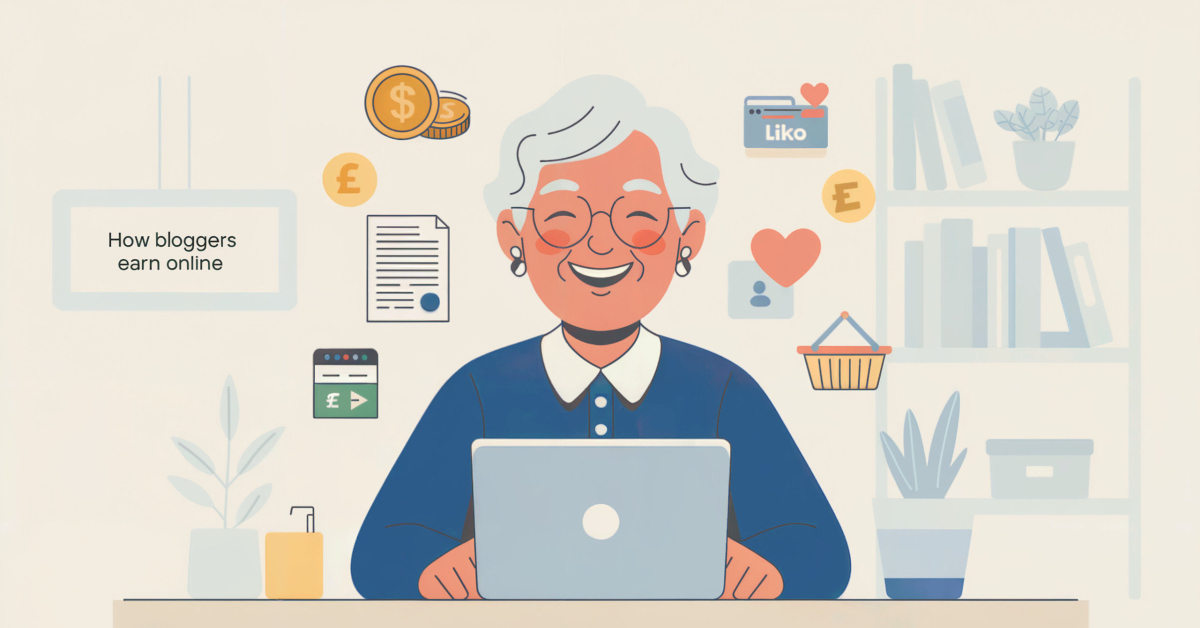
Bloggers can earn through:
✔ Affiliate marketing
Recommending products you genuinely use.
✔ Display ads
Ads that pay for every view or click.
✔ Digital products
eBooks, printables, templates, checklists.
✔ Sponsored posts
Brands pay you to review or mention a product.
✔ YouTube content
If you combine blogging with video.
Most retirees start modestly, £20 here, £50 there, and grow over time.
7. The Best Blogging Niches for Retirees (2025–2026)
If you want your blog to grow more easily, choose a niche with:
- search demand
- products to recommend
- an audience with needs
- something you enjoy writing about
Top retiree-friendly niches include:
- Healthy living over 60
- Gardening for beginners
- Baking and home cooking
- Motorhome travel
- UK walks and day trips
- Knitting, crochet, card-making
- Budgeting and simple living
- Photography for beginners
- Pet care for older dogs
- Retirement lifestyle, wellness & wellbeing
Pick a topic you’d still enjoy six months from now.
8. The Most Common Blogging Mistakes (and Gentle Fixes)
Mistake 1: Overthinking your niche
Fix: Start writing — clarity comes from action.
Mistake 2: Expecting instant income
Fix: Think “garden”, not “lottery”.
Mistake 3: Trying to make every post perfect
Fix: Aim for helpful, not flawless.
Mistake 4: Ignoring SEO
Fix: Use RankMath and focus on one keyword per post.
Mistake 5: Forgetting to enjoy it
Fix: Write with a cuppa, not pressure.
9. Is Blogging Outdated in 2025–2026?
Absolutely not.
Blogs remain incredibly popular with readers aged 45–75 — the group that consumes the most online articles. They prefer:
- clear explanations
- practical advice
- stories from real people
- step-by-step guidance
- trustworthy voices
Retirees are perfect for this.
10. Tools to Make Blogging Easier (Even If You’re Not Techy)
Try these beginner-friendly tools:
- Canva – graphics made simple
- Grammarly – fixes spelling and grammar
- RankMath – SEO made easy
- Trello – organise your ideas
- Unsplash/Pexels – free photos
- ChatGPT – helps outline or edit posts
Small tools, massive confidence boost.
11. Your First 30 Days of Blogging (Simple Checklist)
Week 1
✓ Choose your niche
✓ Buy your domain
✓ Set up hosting
✓ Install WordPress + Divi
Week 2
✓ Create your About page
✓ Write your first post
✓ Add one image
✓ Share it once on social media
Week 3
✓ Learn RankMath basics
✓ Write your second post
✓ Add internal links
Week 4
✓ Look at affiliate programmes
✓ Brainstorm 10 more post ideas
✓ Celebrate your progress
12. Final Thoughts
Blogging is more than writing online; it’s a chance to:
- reconnect with your creativity
- share your voice
- help others
- stay mentally active
- earn a little extra income
- build something meaningful
You’re not too old.
You’re not too late.
You’re exactly where you need to be
Frequently Asked Questions
1. Am I too old to start a blog?
Not at all. Retirees often make the best bloggers — you have stories, wisdom, and life experience that people love to read. Blogging is about connection, not age.
2. Do I need to be good with technology?
No. Many tools are simple, automated and beginner-friendly.
3. How long does it take to earn money?
Some people see small results quickly. Most see steady progress after a few months of consistent effort.
4. What should I write about?
Anything you enjoy. Gardening, baking, pets, crafts, budgeting, photography, travel, or even retirement life itself. If you love the topic, your readers will feel it.
5. How often should I publish posts?
Once a week is ideal, but once a month is absolutely fine. Consistency matters more than frequency.
6. Can I blog without showing my face?
Yes, many bloggers stay private. You can focus on photos of your hobbies, nature, or tutorials instead.
7. What equipment do I need?
Just a laptop or tablet, an internet connection, and a comfortable spot to write. Everything else can come later.
8. Is blogging outdated now?
Not at all. People still search for helpful guides, personal stories, and step-by-step advice every single day — especially from trustworthy voices like yours.
9. How do bloggers actually make money?
Through affiliate links, ads, digital products, sponsored posts, YouTube videos, and more. Start small and let it grow naturally.
10. What’s the easiest way to begin?
Pick your niche, register a domain, set up hosting, install WordPress + Divi, and write a simple intro post—just one small step at a time.
Ready to Start Your Blogging Journey?
Download your free guide:
“5 Fast and Easy Ways to Start Earning Online in Retirement”
And join our friendly Facebook community where retirees support each other, learn together, and celebrate every win, big or small.
You’re building something special, and I’m right here cheering you on.


Trackbacks/Pingbacks